Tuesday, March 10th, 2026 and is filed under Oil and Gas Current Events
The Iran conflict and oil prices have once again become a major topic in global financial markets as geopolitical tensions in the Middle East ripple through the energy sector. Oil prices have surged sharply in recent weeks following military strikes and escalating tensions involving Iran, raising concerns about supply disruptions and the stability of global energy markets. Because oil is one of the most widely traded commodities in the world, even the perception of supply risks can cause rapid price swings that affect economies and consumers worldwide.
The latest surge in oil prices has been driven primarily by fears of supply disruptions in the Persian Gulf. A significant portion of the world’s oil supply flows through the Strait of Hormuz, a narrow shipping lane bordering Iran that carries roughly 20% of global oil and natural gas supply.
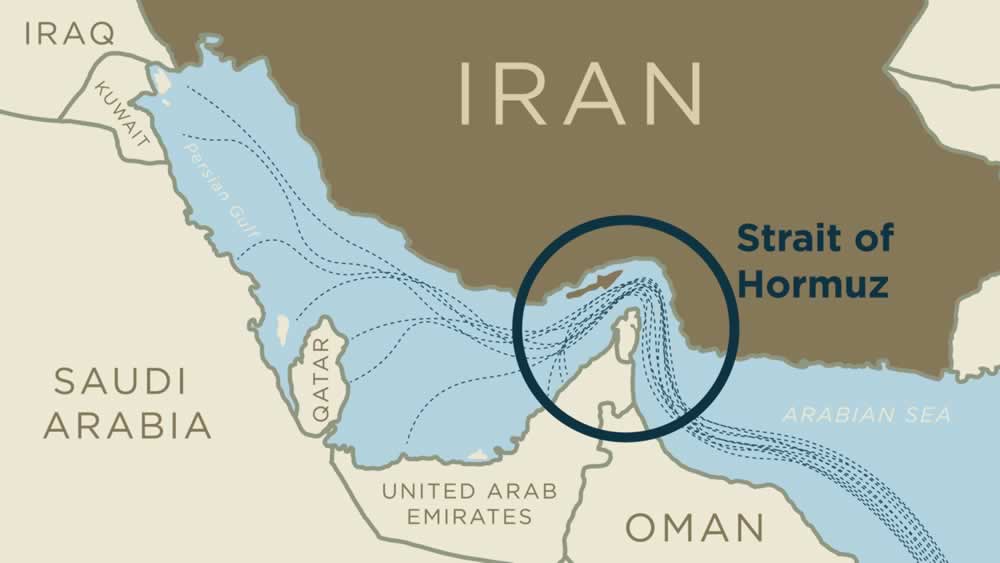
Strait of Hormuz
As tensions escalated, oil markets reacted quickly. Brent crude and West Texas Intermediate (WTI) both jumped significantly, with Brent briefly rising into the $80–$100 per barrel range and climbing as much as 18% in a single week as traders priced in potential supply disruptions.
Analysts note that the oil market reacts quickly to geopolitical risk because any threat to shipping lanes or energy infrastructure can temporarily reduce supply. If tanker traffic slows or insurance costs spike due to conflict risk, fewer shipments move through key waterways—pushing prices higher even if actual production has not yet fallen.
Financial markets have also reacted. Rising oil prices can increase fuel costs, contribute to inflation pressures, and influence central bank policy decisions around the world.
With oil prices climbing amid the Iran conflict, the Trump administration has begun examining several policy options aimed at stabilizing the market and preventing prolonged price spikes.
One of the most widely discussed measures is coordination with allies to release oil from emergency reserves. Reports indicate that G7 countries and the International Energy Agency are discussing a potential release of hundreds of millions of barrels from strategic petroleum reserves to ease supply concerns and calm markets.
Officials are also considering domestic measures designed to reduce transportation costs and improve supply flows within the United States. These include:
Such policies aim to reassure energy markets that sufficient supply will remain available, reducing panic-driven price spikes.
Energy markets are particularly sensitive to geopolitical events in the Middle East because the region remains one of the world’s largest sources of oil production and exports.
Even temporary disruptions can move prices dramatically. For example:
In many cases, markets react to risk rather than confirmed shortages. The fear that shipments could be delayed or blocked is often enough to drive short-term price spikes.
Despite the recent surge, history suggests that geopolitical oil shocks are often temporary.
Research from Goldman Sachs notes that “oil price spikes from geopolitical shocks and temporary supply disruptions can be short-lived.”
Similarly, analysts at Raymond James emphasize that while conflicts can push prices higher in the near term, “geopolitical events tend to have limited and short-lived impacts” on broader financial markets.
Past events support this pattern:
These historical patterns suggest that markets often correct once it becomes clear that long-term supply has not been permanently disrupted.
Most analysts believe the key factor determining future oil prices will be how long the conflict lasts and whether shipping routes remain open.
If the conflict is short and energy infrastructure remains intact, markets could stabilize relatively quickly. Morgan Stanley analysts note that a contained conflict lasting only a few weeks would likely limit economic spillover effects.
However, a prolonged disruption—particularly one that affects tanker traffic through the Strait of Hormuz—could keep prices elevated for a longer period.
At the moment, many energy analysts still view the current spike as a risk-driven surge rather than a permanent structural change in supply.
The relationship between the Iran conflict and oil prices highlights how sensitive global energy markets remain to geopolitical developments. While the current tensions have pushed prices higher and created volatility, history suggests that such spikes often fade once supply concerns ease.
Government policy responses, strategic petroleum reserves, and global production adjustments can also help stabilize markets.
For now, investors and consumers alike will be watching two key developments: the duration of the conflict and the continued flow of oil through the world’s most critical shipping routes. If those factors remain relatively stable, the latest surge in oil prices could prove to be another short-lived geopolitical shock rather than a lasting shift in the global energy landscape.

This is not an offer to sell nor solicitation of an offer to buy any security. Such offer may only be made by a written prospectus in a jurisdiction wherein the offering is duly registered or exempt therefrom. This content is provided for informational purposes only. Nothing herein shall be construed as tax, legal, or accounting advice. Investing in oil and gas is highly speculative and could result in substantial losses. There are no guarantees that any returns will be achieved. Potential investors should consult their attorney, accountant, and financial advisors before investing in oil and gas.



© Copyright 2026 Aresco, LLC. All rights reserved. | Privacy Policy | Admin Log in
